

Free guide
How to Start an Aircraft Detailing Business
From nothing to your first paid aircraft. The whole shape of it, including the part almost everyone gets stuck on.
Written by Zachary Craft and Liam Henning, working pilots who detail aircraft.
What the work actually is
Aircraft detailing is appearance care for private, corporate and charter aircraft. Exterior washes, interiors, brightwork, coatings. On the ramp and in the hangar, usually for an FBO and the owners who keep aircraft there.
It is not maintenance. You do not need an FAA certificate and you are not allowed to do anything that touches airworthiness. That line is real and the course spends a whole module on exactly where it sits.
Why it is not car detailing with a taller ladder
People come into this from cars and assume it transfers. Most of it does not, and the parts that do not are the parts that cost money.
- Most of the aircraft is off limits to you. There are probes, ports, sensors and panels you must never touch, and some of them look like nothing at all.
- The chemicals are different. Aircraft paint, composites and the plastics in the windows will not take what a car will. The wrong product does damage you cannot polish out.
- The insurance is different. A detailing policy written for cars will not respond to an aircraft. This is the single biggest thing that stops people, and it is Part 3.
- The customer is different. You are working in front of a flight department, a line crew and an owner, on an asset worth more than your house.
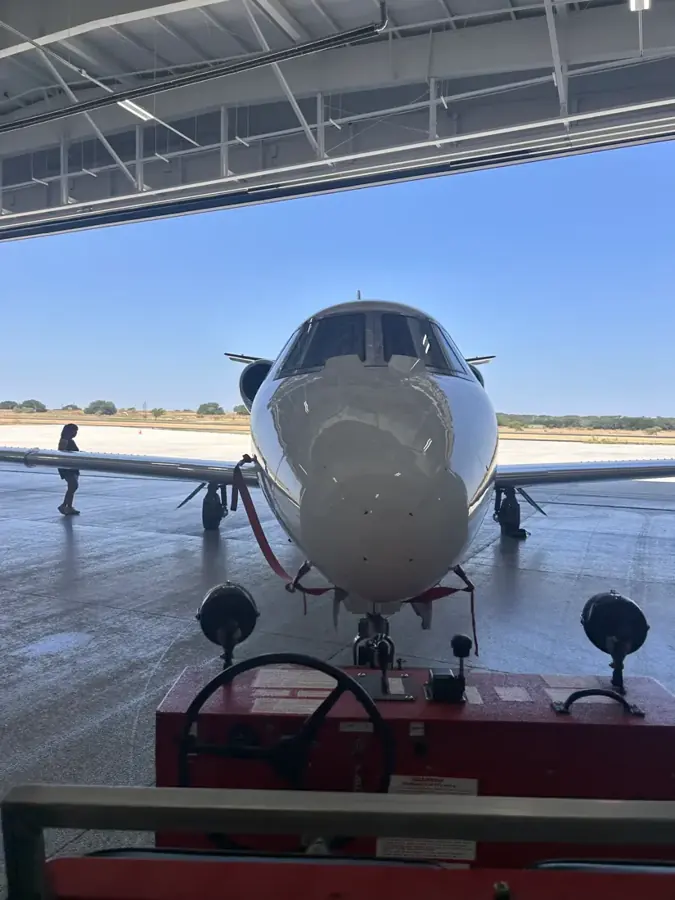
The good news is the same list. Everything that makes it harder is also why there are far fewer people doing it, and why the work pays what it does.
Find out whether there is a market where you live
Do this before you spend a dollar. It takes about twenty minutes and it is the only honest way to know whether this works where you are.
- Open AirNav and list every airport within your real driving radius. Be honest about the radius. A field you will not actually drive to on a Tuesday is not in your market.
- For each one, look at who is based there. You want corporate, charter and private turbine traffic. A field that is all flight school trainers and tiedowns is not your market, however close it is.
- Count the FBOs. Every field with corporate traffic has at least one, and each one is a door.
- Search for aircraft detailing near each field. If nothing comes up, that is not a bad sign. It is the normal sign. Most of this work is never advertised.
If you end up with three or more fields that have corporate or charter aircraft on them, there is a business here. If you end up with none, this is not the right business for where you live, and it is better to know that now.
What has to exist before you touch an aircraft
This is where most people stall, because it is boring and it is not detailing. It is also not optional, and no FBO will talk to you without it.
A business entity
An LLC, in your own state. Between about $50 and $500 depending where you are, filed on your Secretary of State's website, usually approved in a few days. Then a free EIN from irs.gov, then a business bank account that nothing personal ever touches. That separation is most of what keeps a claim against the business from reaching your house.
The insurance, which is the real gate
The coverage that matters is hangarkeepers legal liability, sometimes written as care, custody and control.
Here is why it matters more than anything else in this guide. General liability covers a person you hurt or property you damage that is not in your care. The moment an aircraft is in your care it is excluded, and that is precisely the moment you are touching it. A general liability policy, on its own, covers you for everything except the thing you actually do.
- Call an aviation insurance broker, not your car or home agent. Ask straight out: do you write hangarkeepers for aircraft detailing contractors? If they hesitate, call the next one.
- Get two or three quotes. They come back very differently for the same risk.
- Ask the FBO what their agreement requires before you buy anything. Their number is the one that decides it.
- Keep the certificate as a PDF on your phone. You will be asked for it at the gate, and "I can email it later" is how a first job gets canceled.
Do not touch an aircraft before the policy is bound. Not for a favor, not for a friend, not for a free one to prove yourself. One scratched windscreen or one corroded static port is the whole business.
What a job actually looks like
Start to finish, so you know what you are signing up for. The order is not arbitrary and changing it is how people get hurt or sued.
- Before you leave. Call ahead. Confirm the aircraft is on the ground and the keys are located. A screen saying landed is not the same as landed, and on a two hour drive this is the highest value minute of your day.
- On arrival. Check in at the FBO desk, every visit, even the fiftieth. Confirm you are authorized to work on that aircraft. Agree where the water goes.
- Documentation, before anything touches the aircraft. A narrated walkaround video and a full photo set. Every existing defect photographed close up and wide: close so you can see what it is, wide so you can prove where it was. That pair is what ends a dispute about who caused what.
- Protection. Cover and mask everything in Part 5. Count the pieces of tape you use and write the number down.
- The work itself. Top down, back to front. Interior first if it is in scope, otherwise you carry exterior dirt into a cabin you already cleaned.
- The count-off. Before the aircraft moves, every cover and every piece of tape comes off, counted out loud against the number you wrote down. Twice. This is the step that stops a covered pitot tube going flying.
- Handover. Walk around with the client or the line crew, in daylight if you can. After photos, same angles as the before set. Report anything new immediately, in writing.
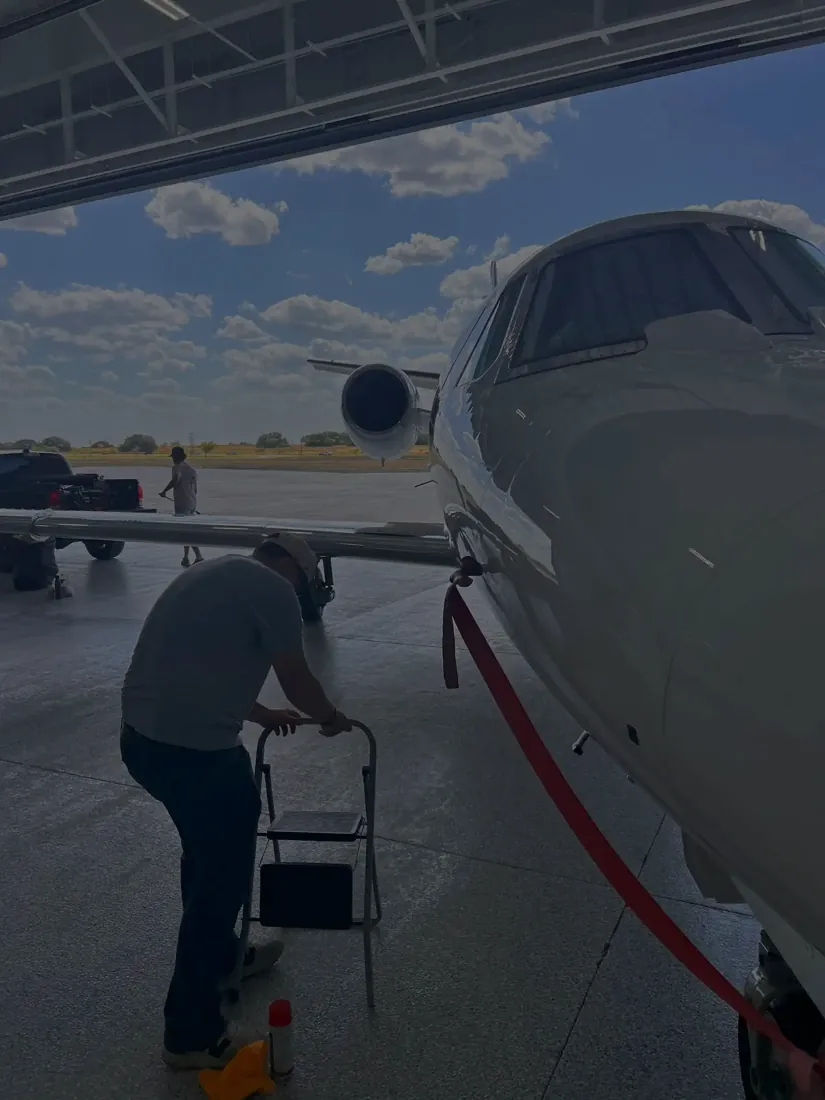
That is the shape. Doing it the same way every time, so a helper gets the same result you do, is what turns this from a job into a business. The course gives you that as printable sheets with your own business on them.
The things you protect on every aircraft, every time
These do not change with the type, the weather or how late you are running. A specific aircraft's maintenance manual overrides any general list, including this one.
- Pitot tubes. Blocked or deformed means no airspeed indication. This is the one that kills people.
- Static ports. Flush with the skin and easy to miss because they look like nothing.
- Angle of attack probes and sensors.
- Static wicks. Thin and fragile. On composite airframes they are bonded on rather than riveted, so they pull off in a hand you did not mean to put there.
- Vents and drains. Anything that goes in stays in.
- Antennas and the radome. No machine, no aggressive chemical. Radar has to see through a radome.
- Composite panels. They do not behave like metal.
- TKS panels. Laser drilled leading edges. Distilled water or IPA only; anything else clogs the pores or damages the foam behind them.
- Any placarded do-not-clean area. Read the placards on the actual aircraft. They are there because somebody already made the mistake.
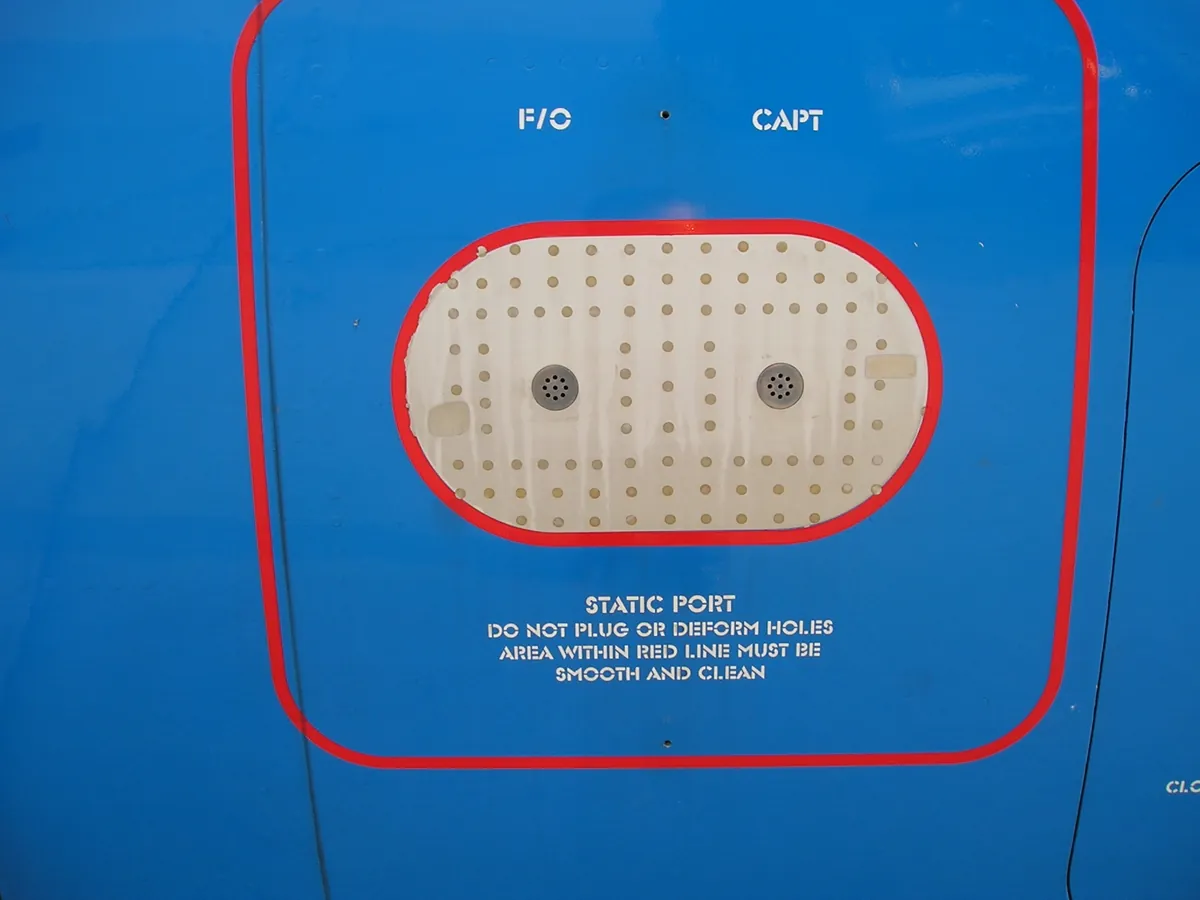
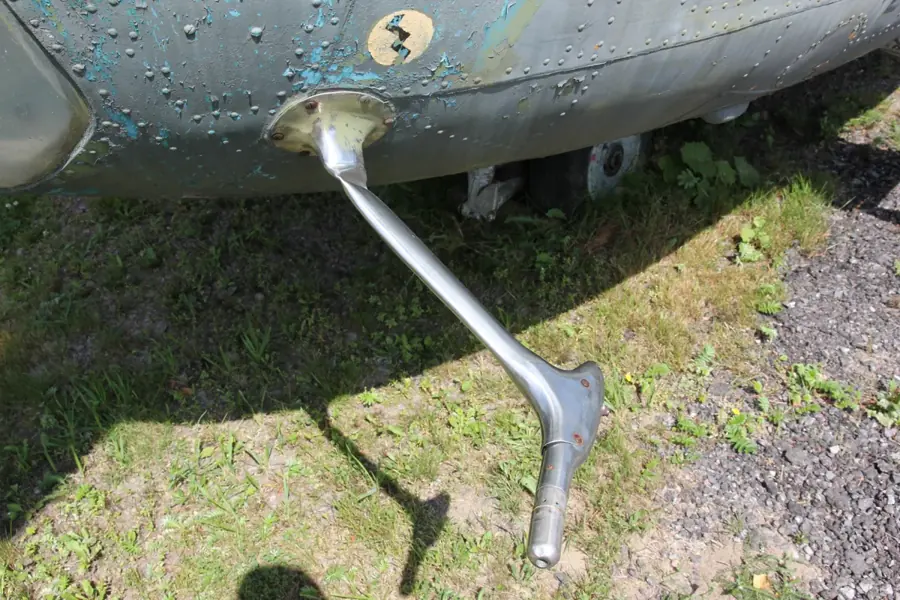
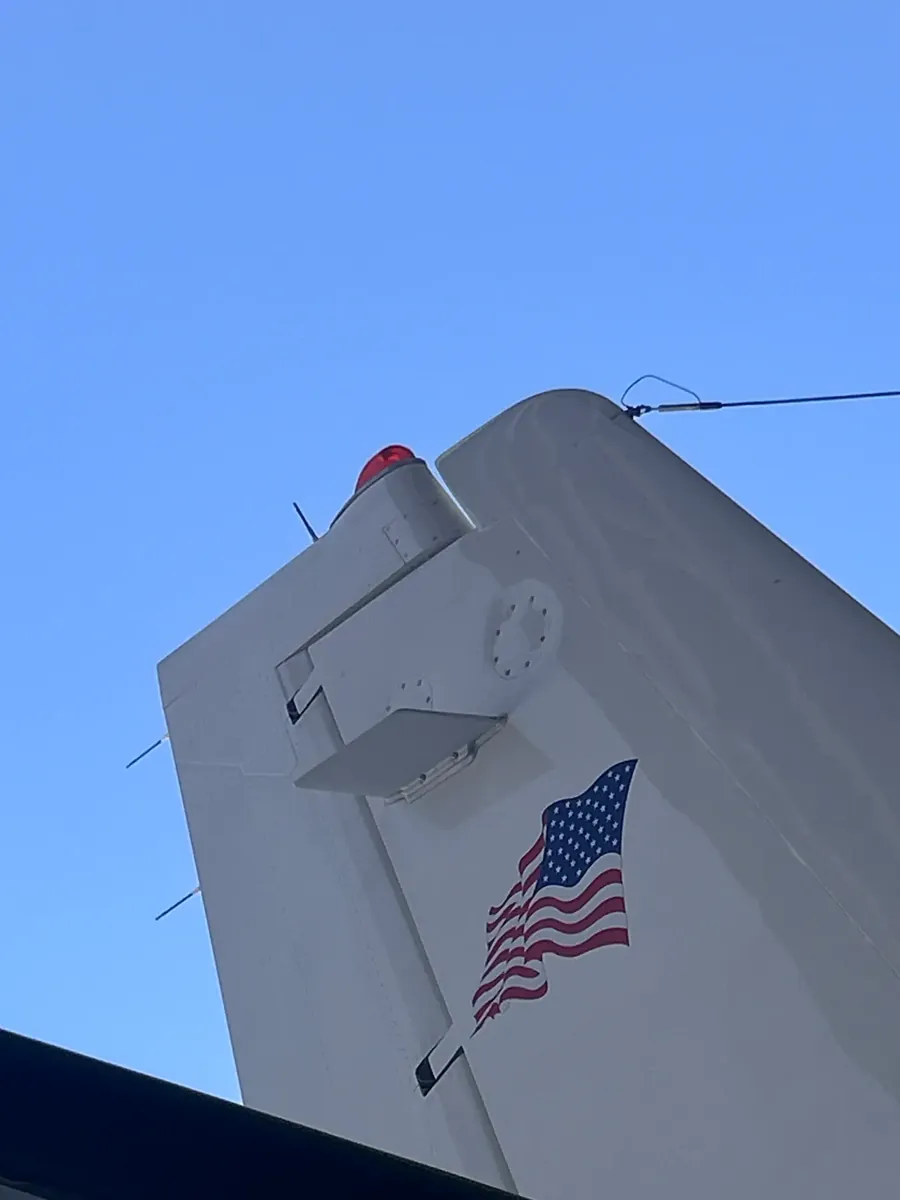
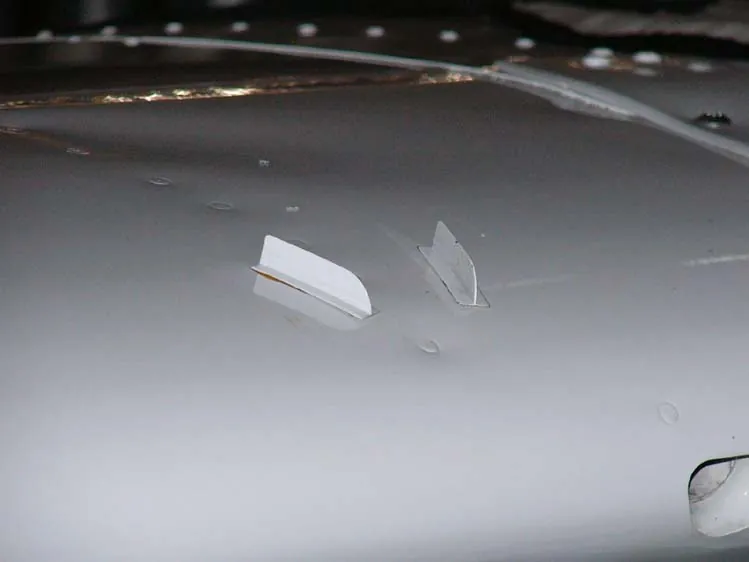
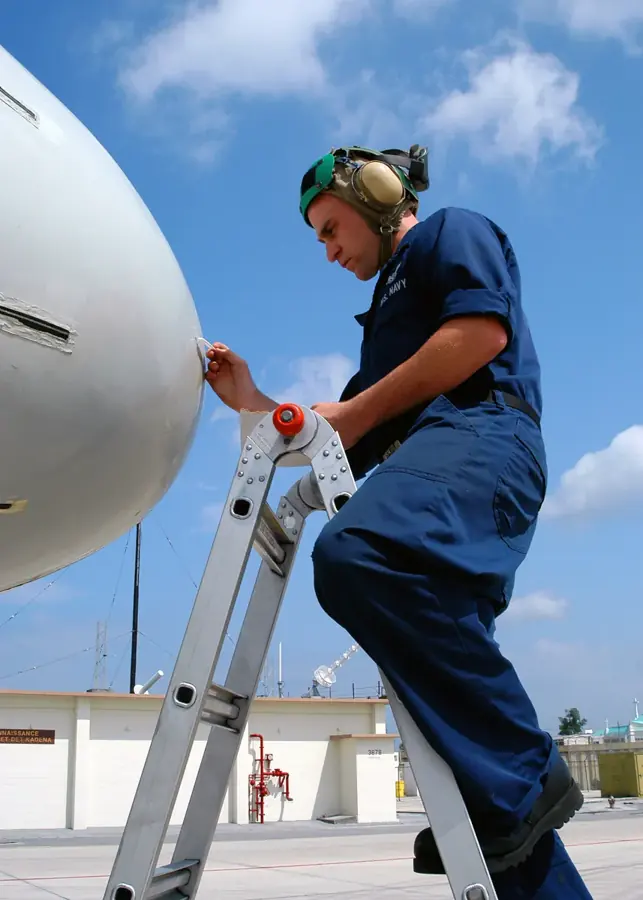
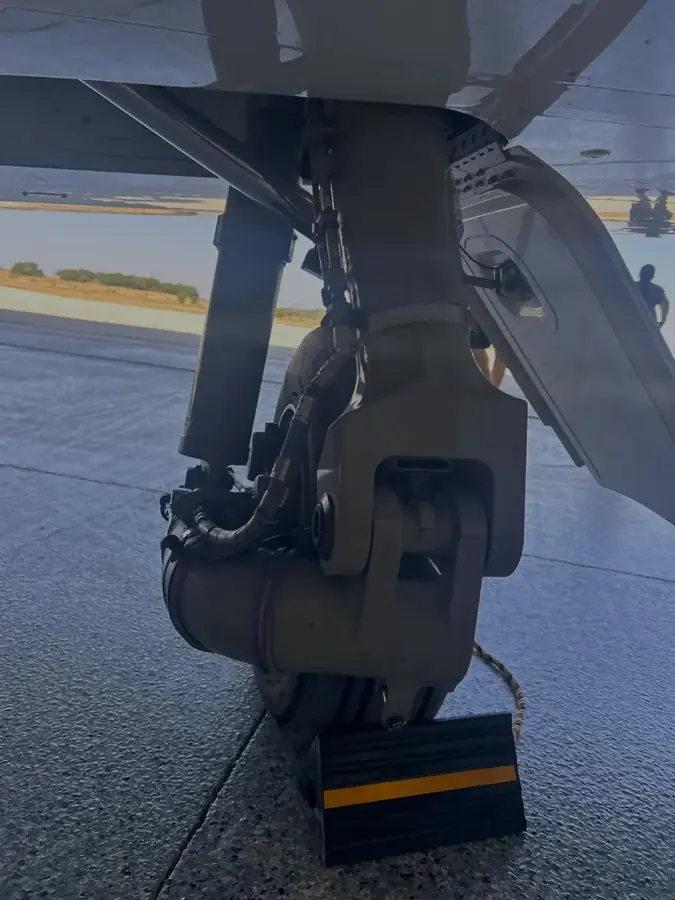
Reference photographs: Dtom; U.S. Navy; and public domain contributors, via Wikimedia Commons. The fin and gear photographs are original.
What it pays
There is no rate card here, because a number without the reasoning behind it will get you in trouble. Here is what actually sets the price.
- Size. A light jet and a mid size jet are not the same job and not the same price.
- Condition. Price the aircraft in front of you, not a clean one. A neglected airframe can be three times the hours of a maintained one that looks similar from thirty feet.
- Scope. Exterior wash, full exterior detail, brightwork, interior, coatings. Each is a different job.
- Your real hours. Including the drive, the setup, the documentation and the count-off. People price the washing and forget the other half of the day.
- Recurring or one off. A scheduled program at a slightly lower rate beats chasing one off jobs, every time.
The margins are better than car detailing and the clients come back more reliably. But the way to arrive at your number is to work out what an hour of your time actually costs you and build up from there. That worksheet is module 5 of the course.
Getting your first FBO
This is the hardest single step and it is where most people stop. It has almost nothing to do with how good you are at detailing.
What an FBO actually cares about
An FBO's business is fuel, hangar space and service. Detailing is not their revenue, it is a problem they have to solve for their customers. When an owner asks who cleans planes around here, they want a name they can give without worrying about it. That is the whole job you are applying for.
What makes them nervous, in order:
- You damage an aircraft and it reflects on them
- You are unreliable and they get the complaint
- You are unprofessional in front of their customers
- You have no insurance and something happens
Every one of those is a reason to say no. Your whole approach should answer them before they are raised.
The three things to bring
- Your certificate of insurance, printed, in your hand. This is the biggest credibility signal you have, because most people who walk in do not have it and the FBO knows it.
- A service agreement, one page. It says you operate with paperwork rather than handshakes.
- Photos of your work. Even if it is not aircraft yet. Quality, not quantity.
Optional and powerful: your written checklist. Bring one and the conversation changes immediately. It is the difference between looking like a person with a bucket and looking like an operation.
The visit
- Go in person. Email gets ignored. Phone calls get "send us something."
- Mid-morning or mid-afternoon, mid-week. Avoid Monday mornings, Friday afternoons and any time the ramp looks busy.
- Ask for the line service manager or the general manager. Not the front desk, they cannot say yes.
What to say, under thirty seconds
"Hi, I'm [name] with [business]. We do aircraft detailing. I'm not here to take your time, I just wanted to introduce myself and leave information in case you ever have owners asking for someone. We're insured, here's our certificate, and here's some of our work."
Then stop talking. Let them respond. You have asked for nothing, removed the pressure, answered their biggest worry before they raised it, and left something behind.
Mistakes to avoid
- Leading with price. Nobody at an FBO cares what you charge. They care whether you will embarrass them. Price is a conversation for the aircraft owner.
- Following up too aggressively. Aviation is small and relationship driven, and pushiness travels. One follow up after two weeks is right. Four in a month is not.
- Arriving without a checklist. Bring your documented process and the conversation changes noticeably.
After the first yes
- The first job is an audition, not a job. Do it extremely well.
- Photograph everything. Before, during, after. That is your portfolio and your protection.
- Communicate before you are asked. Tell them when you arrive, when you are done, and immediately if anything looks off.
- Ask for the referral once you have earned it, not before. Aviation runs on word of mouth more than almost any industry. One good relationship becomes three.
That is the shape of it
If you take nothing else from this: check your market first, get the insurance before you touch anything, document before you start, and walk in person with your certificate in your hand.
What this guide did not give you is the system. The actual chemistry and what it does to aircraft paint. The checklists your crew works from. The pricing worksheet you build your own numbers in. The service agreement. The type cards. The part where it runs the same way whether or not you are watching.
That is the course. Eight modules, every template included, and a chat inside the course when you get stuck.
$200, one payment, everything unlocked the day you buy. No application, no call to book first.